How the dream of an educational sanctuary became real.
Cedar Cove grew through vision, perseverance, and an extraordinary amount of community effort. What began as one founder’s commitment to wildlife education became a public-facing conservation and education center sustained by volunteers and supporters.
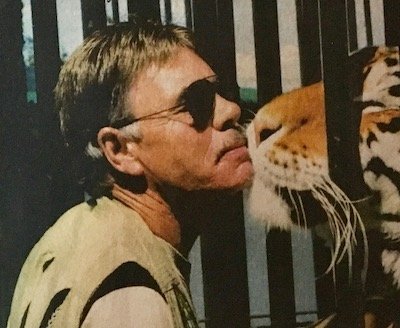
William “Billy” Pottorff
Billy’s vision was to create a place where people could learn about large cats and other species not through spectacle, but through care, story, and education. Cedar Cove grew from that vision and continues to honor it through direct animal care and meaningful public learning.
The organization’s history also reflects something broader: Cedar Cove became possible because local families, civic groups, schools, volunteers, and supporters were willing to invest time, labor, materials, and belief in a difficult idea.
A timeline built by persistence.
Land donation and early site development
Land was donated to support the future site, providing room for enclosures, a lake, public spaces, and an education building. Tigers and cougars were moved to the property in October 1997.
USDA exhibit license obtained
The licensing milestone helped Cedar Cove move closer to safe and structured public access.
Public opening
Public access expanded, culminating in the ribbon-cutting that marked Cedar Cove’s public opening in August 2000.
The work continued
After Billy’s passing, volunteers and supporters continued the work, keeping the mission alive through practical care and community commitment.
A lot of perseverance and support.
Cedar Cove has always relied on a broad network of people willing to build, maintain, improve, and protect it. That volunteer spirit remains one of the organization’s clearest strengths.
Every tour, donation, and volunteer shift helps extend a legacy that was never meant to belong to one person alone.
Still true today
- Volunteer-powered operations
- Community support remains essential
- Education remains central to the mission
- Animal care drives every public-facing effort